
CONSTRUCTION DEPOT JOURNAL
Florida Lot Drainage: What to Coordinate Before Earthwork
Organize stormwater questions, permitting inquiries and responsibilities before preparing a Florida lot for construction.
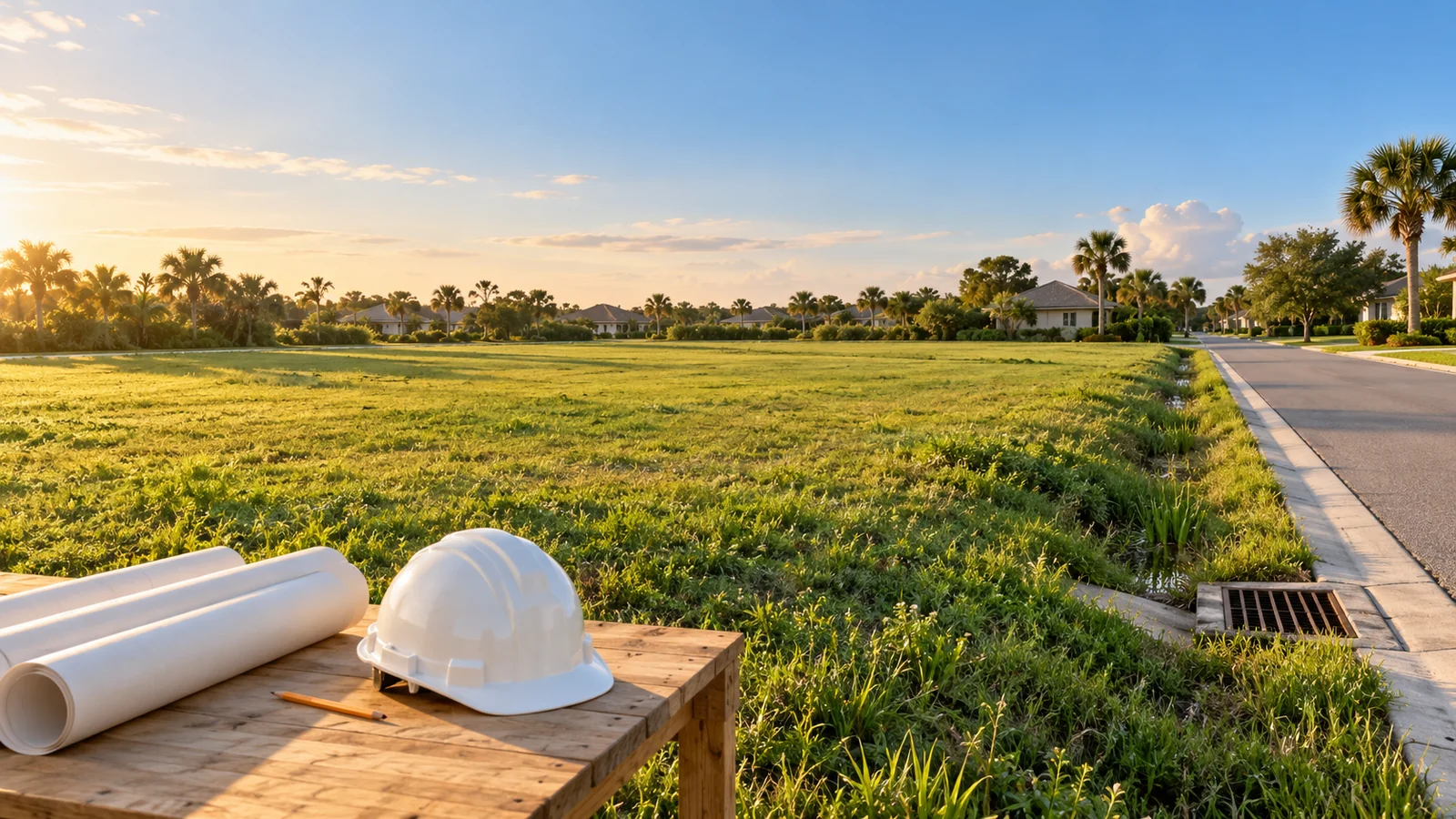
Drainage starts with planning
Before clearing or grading a Florida lot for construction, gather answers about water management and the authorizations that apply. Site preparation is part of the project. Coordinate it with design work and regulatory inquiries before scheduling equipment.
On October 27, 2026, South Daytona reported that its public works crew cleaned and inspected stormwater pipes and basins with a camera at Teague Street and Magnolia Avenue. The update illustrates the attention surrounding drainage infrastructure requires. It does not establish conditions for another property or guarantee protection against flooding.
This guide helps organize conversations and documents. Site evaluation and any engineering solution belong with qualified professionals and the relevant authorities.
Describe the work you want to begin
Prepare a short description of the intended activities: removing vegetation, changing ground levels, opening access or building. Identify areas being considered for materials and equipment and parts of the project that remain undefined. You do not need to invent a technical solution to explain what you want to do.
Ask the responsible professional what site information is needed before proceeding. Available surveys, existing plans, references to earlier permit records and dated photographs taken with permission can be useful starting points. Flag missing documents instead of filling gaps with assumptions.
If the parcel belongs to a larger development, disclose that in the first inquiry. The analysis may extend beyond the lot boundary: DEP addresses a common plan of development when explaining construction coverage. Request a determination that fits your project.
Distinguish the inquiries you need to coordinate
Florida DEP's guide explains that the stormwater Construction Generic Permit (CGP) is separate from the Environmental Resource Permit (ERP) and local discharge permits. Do not assume that resolving one completes the others.
Create a list showing the program consulted, the authority that responded, the document received and the outstanding decision. Avoid a single checkbox labeled “permits” for different questions. A submitted application, an answered inquiry and an issued authorization deserve separate statuses.
Ask who should confirm whether each program applies and what evidence supports the response. The purpose is to assign the right review, rather than have the owner independently interpret environmental requirements or design drainage.
Keep local examples within their limits
Charlotte County publishes a stormwater permit guide that lists activities exempt from that local process and warns of the possible need for ERP or CGP coverage. A local exemption should not be read as an automatic answer about other programs.
For the applications it handles, the guide includes survey information, a stormwater plan and a report prepared by the specified professionals. Use that example to ask what your jurisdiction needs, rather than turning it into a mandatory checklist for all of Florida.
Confirm whether the property falls under the relevant city or county and which office will answer site questions. Ask that issues requiring additional inquiries be identified. Do not assign a cost or review period to an activity whose necessity has yet to be confirmed.
Check the current version before submitting
Published developments from 2026 need to be distinguished. The Southwest Florida Water Management District announces a new ERP submission channel beginning July 7, 2026. Check its official page before reusing saved instructions. That notice applies to that district.
Separately, DEP maintains a proposed CGP changes page updated July 24, 2026. Draft documents do not establish that their conditions are in force. The official register consulted identifies the final version of Rule 62-621.300 as effective May 7, 2025, with a review dated September 14, 2026.
Keep the date of each inquiry and ask your professional to confirm the applicable documents when submitting. This guide does not reproduce fees, thresholds or timelines that may change.
Connect the answers to the start of work
As responses arrive, review with the team what remains unresolved before the intended activity. Link each decision to its owner and the document that will confirm it. “Inquiry completed” does not necessarily mean “authorized to begin.”
For organizational purposes, discuss these questions at a preconstruction meeting:
- Who confirms that site preparation matches the reviewed documents?
- Who communicates applicable conditions to the contractor?
- Which unresolved issues prevent an activity from being scheduled?
- How will a scope change be reviewed before it is carried out?
Document agreements and open questions. If access, the work area or part of the design changes, ask whether previous responses remain sufficient. Avoid settling those differences through informal instructions to equipment operators.
Prepare for the project's next stages too
Ask the team to define responsibilities for follow-up and recordkeeping during construction. The project file should make it possible to identify which plan is in use and whom to consult when a condition differs from expectations.
Do not improvise slopes, water outlets, pumping or control measures from a photograph or this guide. Have the appropriate team determine the solutions and confirm the conditions for carrying them out. Organized preparation does not guarantee freedom from flooding, permit approval or investment results.
Construction Depot describes its construction management service as support for coordinating teams, schedules, budgets and resources. You can contact Construction Depot with the project description, available documents and open questions to discuss the scope of that support.
Educational content; not a substitute for individualized technical, environmental or legal advice or a project estimate.
Sources and information date
Research and editorial cutoff: October 30, 2026. This guide combines context from this week with practical planning guidance. Each reference retains its own date.
- South Daytona: Stormwater System Improvements, update dated October 27, 2026.
- Florida DEP: Construction Activity, last modification indicated: November 6, 2025; standing guide checked against the current official register.
- Florida DEP: proposed CGP changes, updated July 24, 2026; proposals, not adopted requirements.
- Florida Administrative Code: Rule 62-621.300, final version effective May 7, 2025, with review dated September 14, 2026.
- SWFWMD: ePermitting, notice effective July 7, 2026; no general editorial date.
- Charlotte County: Stormwater Permit, no editorial date indicated; current local guide consulted.
- Construction Depot: construction management, service and contact verified on the research date; no editorial date indicated.
CONSTRUCTION DEPOT
Let’s build something that matters.
Tell us about your vision. We’ll help you find your next step.